
Challenges Facing the Foundry Industry and How ERP Solves Them
Introduction
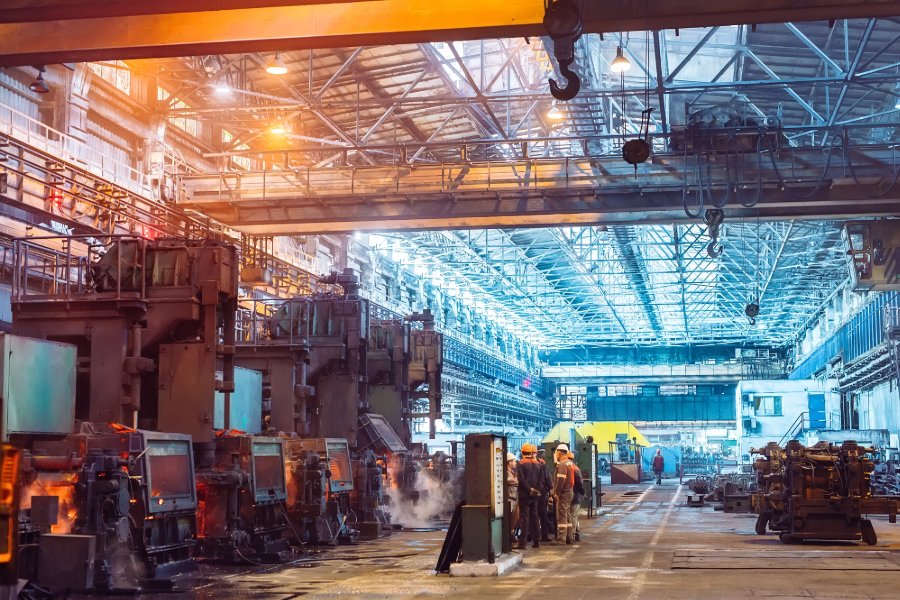
Scrap prices move weekly. Furnace power bills climb. A customer asks which heat number produced their casting, and the answer lives in three registers and a supervisor’s notebook. That is daily life in the foundry industry, where metal, energy, and quality pressure margins harder than in many other manufacturing sectors.
This guide maps the challenges facing modern foundries, especially Indian SMEs and jobbing shops, and explains how ERP (with foundry-specific configuration) turns scattered data into charge control, yield visibility, and reliable delivery.
Why the foundry industry is under pressure
Foundries sit between volatile commodity inputs and demanding OEM customers. You melt, pour, fettle, machine, and ship, often with tight alloy specs, audit trails, and penalties for late or defective castings. When operations run on spreadsheets, the foundry industry feels every shock twice: once on the shop floor, again when finance closes the month and true casting cost is still unclear.
ERP does not replace metallurgical skill, it gives your team one system for melt, mold, stock, QC, and money so decisions are faster and disputes rarer.
Top challenges in the foundry industry (and ERP responses)

1) Raw material volatility and charge mix control
Foundries live on scrap, returns, ferro alloys, and additives. When purchase price spikes, margin disappears unless consumption per heat is visible. Spreadsheets rarely tie charge mix to actual pours.
ERP solves this by storing approved recipes per grade, logging what went into each heat, and updating inventory when metal is charged and poured. Purchasing sees reorder points; production sees whether today’s heat matched spec before pour, not after customer complaint.
2) Yield loss and invisible metal recovery
Runners, risers, grinding loss, and internal rejection eat profit. Without systematic yield tracking, the foundry industry accepts “about 70%” as folklore instead of measuring by product line or customer part.
ERP captures planned vs actual weight per heat, rejection quantities, and return scrap back to melting. Leadership spots which patterns, operators, or alloys drive loss, then fixes process instead of blaming month-end variance.
3) Energy cost and furnace operations
Induction and cupola operations are energy-intensive. When furnace logs stay on paper, kWh or fuel per ton is a guess.
Foundry ERP records melt start/end, hold time, idle time, and links energy cost to heat number. You compare shifts, campaigns, and maintenance windows, similar to how OEE thinking applies in machine shop management software for downstream machining cells.
4) Heat number traceability and customer audits
Automotive, pump, and engineering customers demand traceability: which heat, which charge, which QC test for this casting serial. After a field failure, “we think it was that week’s melt” fails audits and contracts.
ERP assigns heat numbers to melt batches and links them to production orders, inspection records, and dispatch. Traceability becomes search, not archaeology, critical for quality agreements in ERP for metal fabrication supply chains that include castings.
5) Pattern, mold, and core inventory
Patterns sit in racks, repair shops, or customer sites. A missing core box stops a line while planners thought it was “somewhere near bay 2.”
ERP treats patterns and molds as managed assets: location, shots/life, repair history, and due dates for maintenance. Pour planning checks availability before promising dispatch, reducing firefighting on the molding floor.
6) Pour scheduling and melt order chaos
Jobbing foundries juggle multiple grades, box sizes, and customer priorities. Whiteboards break when one furnace trips or a priority order lands mid-shift.
Melt orders and pour sequences in ERP show what to run next, which heat shares a ladle, and where bottlenecks form. Integration with sales and ERP in supply chain management aligns castings to inbound material and outbound dispatch dates.
7) Rejection, rework, and QC documentation
Foundries reject for shrinkage, sand, dimension, and surface defects. If rework is not coded, true cost per good casting is wrong, and the same defect repeats.
ERP captures rejection reason codes, disposition (rework, scrap, return to melt), and customer NCR history. QC checkpoints attach to heat or batch so you stop shipping “probably OK” parts. This is where generic accounting software stops and best manufacturing ERP software with shop-floor depth matters.
8) Casting-wise costing and late margin truth
Many foundries know revenue early and margin late, when accounts finally allocate material and power. By then, the loss-making part number has run for weeks.
ERP rolls material, core sand, consumables, labor, machine time, and overhead into casting or customer-wise cost. Management prices quotes with eyes open and culls parts that never earn their melt slot.
9) Multi-location stock and finance disconnect
Finished castings, WIP, and pattern stores often disagree with books. GST and audit stress rise when godown stock and Tally differ.
Integrated ERP inventory with optional Tally integration software and ERP systems in accounting keeps finance and operations on one truth, see also what is warehouse management and why it matters for stock discipline beyond the melt bay.
10) Scaling without enterprise ERP cost
Tier-one ERP is built for corporate governance budgets, not every Indian jobbing foundry. The foundry industry still needs heat logic, not a three-year SAP program.
Mid-market stacks, often Odoo with foundry customization, balance depth and cost. Compare Odoo software: complete guide for growing businesses, why Odoo ERP delivers better ROI for manufacturers, Odoo vs SAP for manufacturing, and best ERP software in India for growing businesses.
What foundry-specific ERP should include
- Charge mix & heat number , recipe, actual consumption, batch ID
- Furnace log & energy , duration, cost allocation per heat
- Pattern & mold management , location, life, repair
- Pour planning & melt orders , sequence, capacity, grade changes
- Yield & rejection analysis , loss reasons, recovery to melt
- QC & inspection , tests linked to heat or lot
- Sales → production → dispatch , one order thread
- Finance & GST , invoices aligned to shipped good castings
That module set mirrors how Nakshatra models foundry workflows, metallurgy-aware configuration, not a generic manufacturing template. Broader efficiency patterns: how tailored ERP solutions improve business efficiency.
Implementing ERP in a foundry (practical steps)
- Discovery , map melt, mold, pour, fettle, machine shop handoff, dispatch.
- Master data , grades, charge recipes, patterns, customers, UoM for weight.
- Configure heat & yield , heat number rules, rejection codes, yield formulas.
- Pilot line or department , one furnace line before plant-wide cutover.
- Train floor supervisors first , they set adoption tone on the melt deck.
- Integrate finance , Odoo accounting or Tally bridge; validate first month close.
- AMC & enhancements , new customer specs, reports, compliance updates.
Follow a phased plan like our ERP implementation guide, avoid big-bang if melting and inventory can go live first.
Common mistakes when foundries adopt ERP
- Buying generic ERP without heat/yield configuration
- Skipping pattern and mold master cleanup
- Under-training melt supervisors, data stays on paper
- Treating ERP as accounting-only while the shop floor stays offline
- No sponsor from plant head, IT owns the project, operations disengage
Choosing a foundry ERP implementation partner
Software wins when the partner understands both furnaces and ERP tables. Evaluate:
- foundry or casting references (jobbing, investment, die casting)
- clear scope for heat tracking, QC, and costing depth
- data migration plan for open orders and pattern registers
- post go-live AMC and on-site support near your plant
Read how to choose an Odoo ERP implementation company in India. Regional examples: Odoo customization in Mumbai, ERP customization in Kolhapur. Platform compare: Microsoft Dynamics 365 vs Odoo, ERP vs SAP: what’s the difference.
Where Nakshatra fits
Nakshatra Solutions builds foundry ERP around real melt-floor workflows, charge mix and heat number, furnace log and energy tracking, pattern and mold management, pour planning and yield calculation, rejection analysis and QC, not around a generic product chart. With 24+ years serving Indian manufacturers, we combine metallurgy-aware consulting with Odoo, Tally, and custom ERP so the foundry industry gets one accountable partner from requirement study through go-live and AMC.
People and compliance scale with operations too, when headcount grows, connect HR via HRMS leave management explained inside your wider ERP stack.
FAQ: Foundry industry and ERP
What are the main foundry industry challenges?
Material cost, yield loss, energy, traceability, pattern control, scheduling, QC, costing, and disconnected shop-floor data.
How does ERP help foundries?
One system for melt, inventory, production, QC, costing, and finance, with heat numbers and yield visibility.
Will generic ERP suffice?
Usually not without foundry-specific configuration for heat tracking, melt orders, and rejection logic.
Is Odoo a fit?
Yes for many SMEs, with customization and an experienced implementation partner.
How long to implement?
Often 6–14 weeks for focused scope; phased modules reduce risk.
How can Nakshatra help?
Foundry ERP on Odoo and custom platforms, visit Nakshatra Solutions
Closing: ERP turns foundry pressure into measurable control
The foundry industry will always face metal and energy volatility, but it does not have to face blind yield, lost heat traceability, or month-end margin surprises. ERP built for casting connects the melt deck to money and delivery so you fix problems while metal is still hot, not after the customer calls.
Ready to address foundry challenges with the right ERP? Contact Nakshatra Solutions for a requirement study and phased implementation plan built for your melting and molding workflow.
.svg)